A mid-mounted engine for a new superclass car
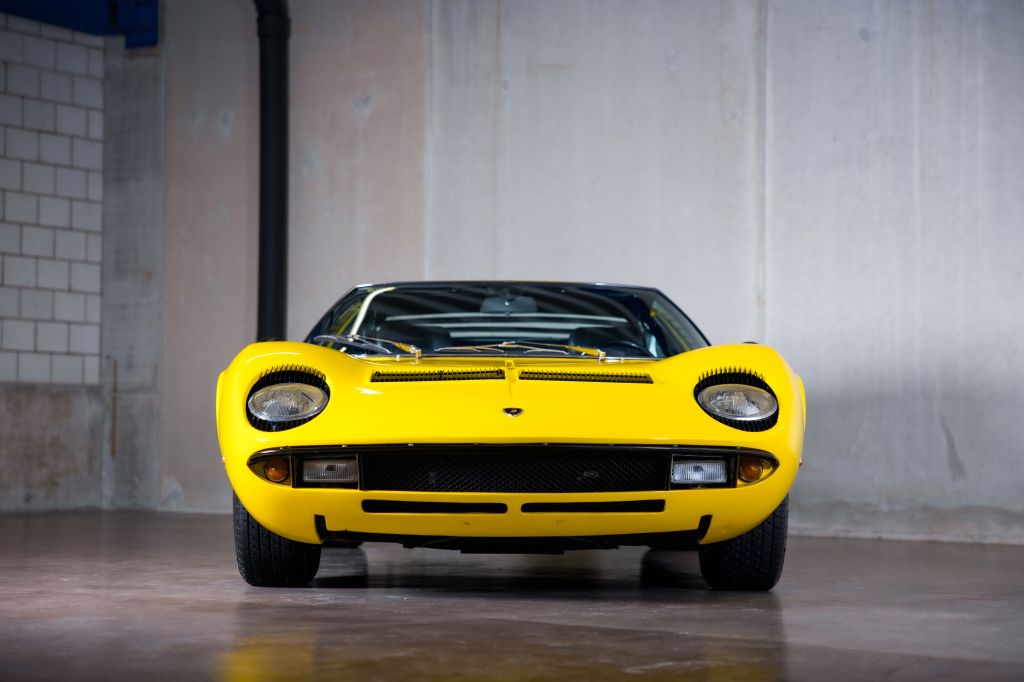
Ferruccio Lamborghini’s bold challenge to Ferrari had begun in 1964 with the 350GT but it was the arrival of the Miura—arguably the founder of the supercar class—that established Lamborghini as a major manufacturer of luxury sporting cars. Prior to the model’s official debut at the 1966 Geneva Salon, Lamborghini cars were respected for their impressive mechanical specifications but they somehow lacked a distinctive persona. All this changed with the arrival of the Miura, named after Don Eduardo Miura, a famous breeder of fighting bulls. The Miura project first surfaced as a rolling chassis displayed at the 1965 Salone dell’Automobile di Torino but was not expected to become a production reality. Nevertheless, by the time of the Geneva Salon the following year, the first completed car was ready for unveiling to an awe-struck press and public.
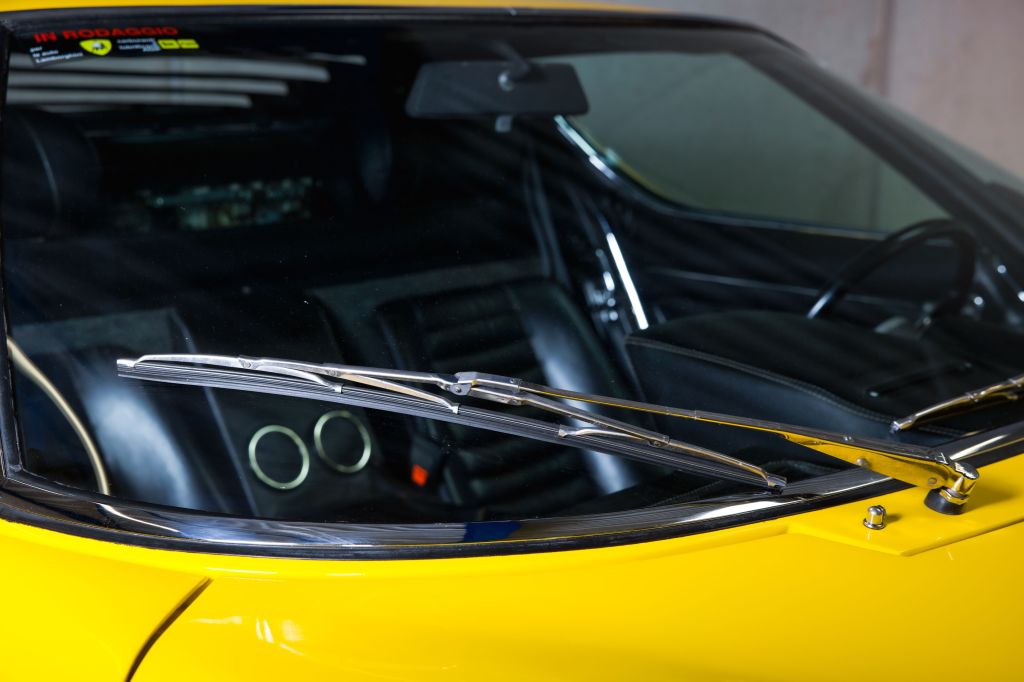
Writing in his book, Lamborghini (1985), Jean-Marc Sorel had this to say about the Miura’s significance: « Thanks to the Miura, Lamborghini made a breakthrough unsurpassed in automotive annals, even reaching the point of worrying Ferrari and Maserati on their own territory, its two powerful neighbours… »
The car’s technical specification was breathtaking in its sophistication and complexity. Designed by Gianpaolo Dallara, the Miura carried its transversely mounted engine amidships in a box-section platform chassis, the latter clothed in stunning coupé coachwork styled by Bertone’s Marcello Gandini. Like the contemporary 400GT, the Miura used the 4.0-litre version of Lamborghini’s Giotto Bizzarrini-designed four-cam V12. With 350bhp available, the Miura was capable of shattering performance, a top speed of 300 km/h being claimed. Production examples were independently tested at more than 275 km/h, confirming that the Miura was the world’s fastest production car. Perhaps surprisingly, Lamborghini’s assessment of demand for its new baby would prove to be way out: instead of the 20 sales expected for the first year of manufacture, they ended up delivering 105 production cars in 1967.
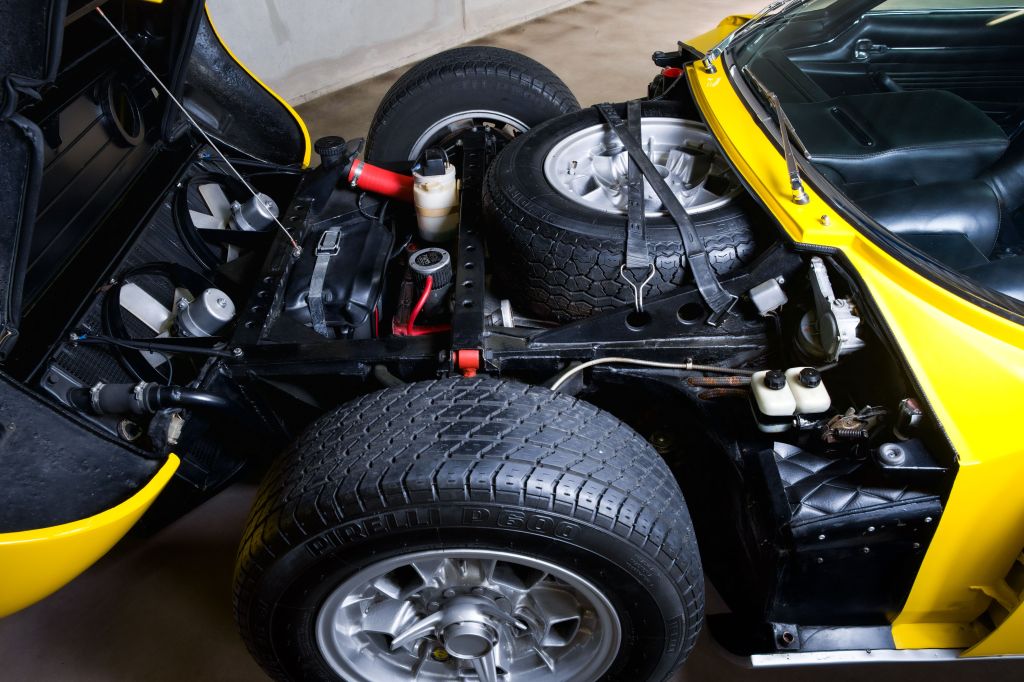
Early in 1968, after the 125th car had been completed, the steel used in the chassis was increased from 0.9 to 1mm in thickness, while from April that year customers could specify a leather interior. They also had a wide choice of eyeball-popping exterior colours that would be unthinkable on a Ferrari, Maserati or – heaven forbid – an Aston Martin. It all helped to cement the Miura’s reputation as the brash new kid on the block.
Initial development had concentrated on chassis strengthening, these improvements being consolidated in the more powerful Miura ‘S’, for spinto (tuned), introduced at the Turin Motor Show in 1968. Produced from January 1969, the Miura P400S featured a more-powerful (370bhp) engine and was outwardly distinguishable from the preceding model by its wider tyres. Other improvements included a quieter transmission, electric windows, better quality interior fittings, leather trim and a re-routed exhaust system that left room for a larger luggage compartment. Later, examples benefited from ventilated brake discs that markedly reduced fade. Around 114 were built before the introduction of the SV version in 1971, and in total just 338 examples of the S model were produced.
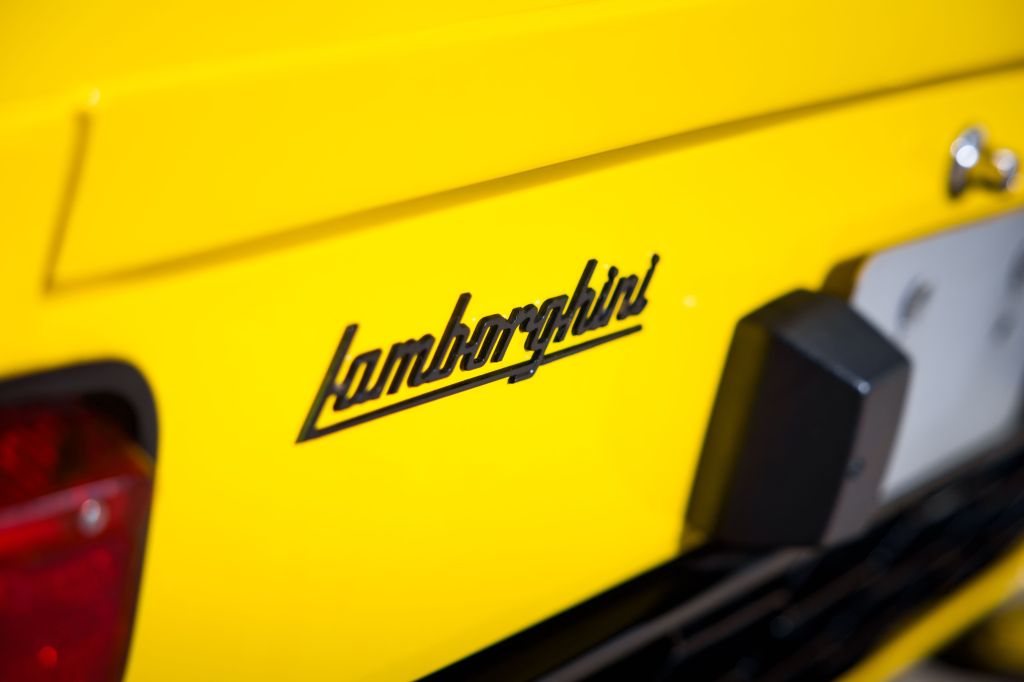
According to Lamborghini factory records, chassis ‘4578’ was delivered new on 30th May 1970 to Swiss agent Garage Foitek of Zurich, with production number ‘533’, body number ‘633’ and engine number ‘30534’. Interestingly, it is noted on factory records as being delivered new in Bianco (white) with a Nero (black) interior. However, the Bertone factory records and those of Ubaldo Sgarzi (Sales Director) both mention this car as delivered new in Arancio Miura (Miura Orange) with Pelle Nera (black leather) interior. In addition, factory driver Enzo Moruzzi’s records confirm that this car was finished in Arancio Miura with Pelle Nera. All this suggests that this car was indeed delivered new in Arancio Miura. Importantly, the car is confirmed as retaining its matching-numbers engine and body.
A copy of what is believed to be the original sales invoice for this car is made out to Baron T De Graffenried of Lausanne and dated 2nd July 1970 for CHF 54,500. De Graffenried was the famous Swiss racing driver turned car dealer Baron Emmanuel ‘Toulo’ de Graffenried.

