Latin America Diaries
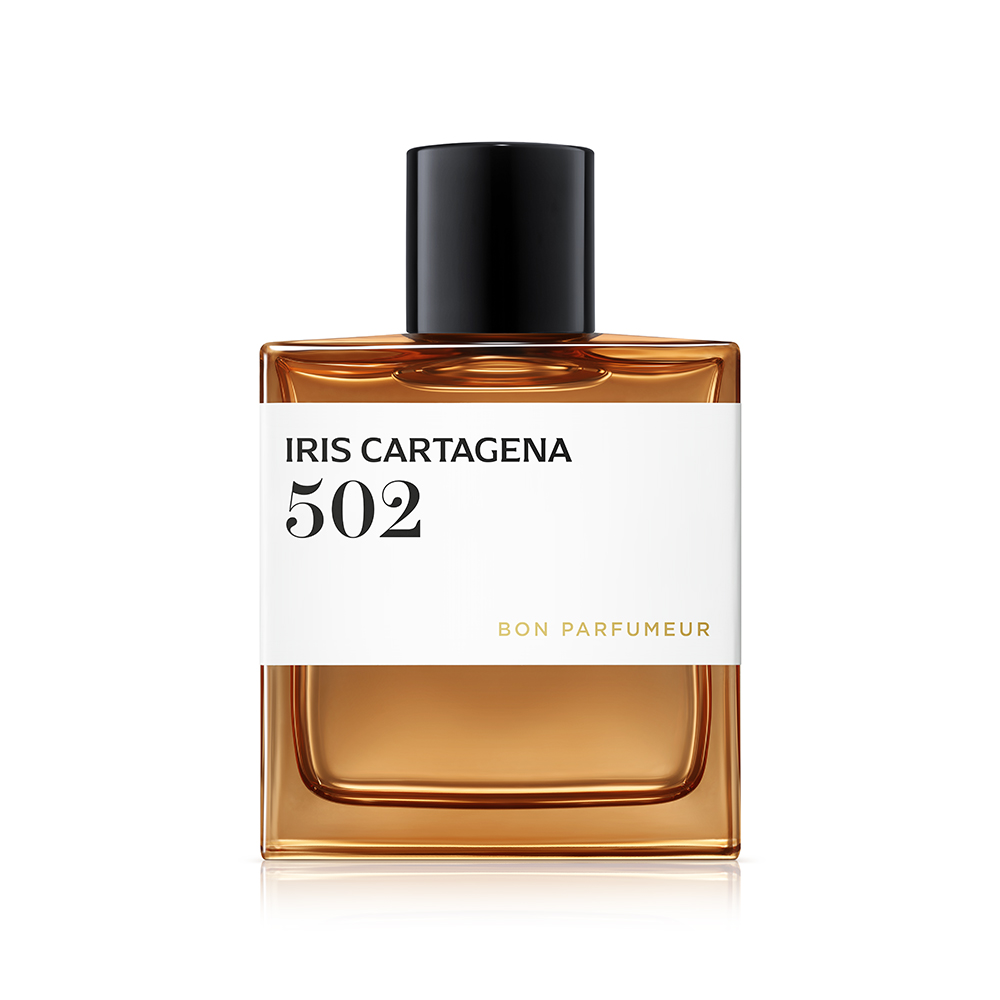
To mark the launch of Bon Parfumeur’s Signature collection, we met Ludovic Bonneton and Clément Marx to discuss Iris Cartagena 502—one of the house’s finest creations, now available as an eau de parfum.
A Love Story Under the Stars of Cartagena
This is the story of a New Year’s celebration unlike any other for Ludovic Bonneton—a traveler who is as compulsive as he is impulsive.
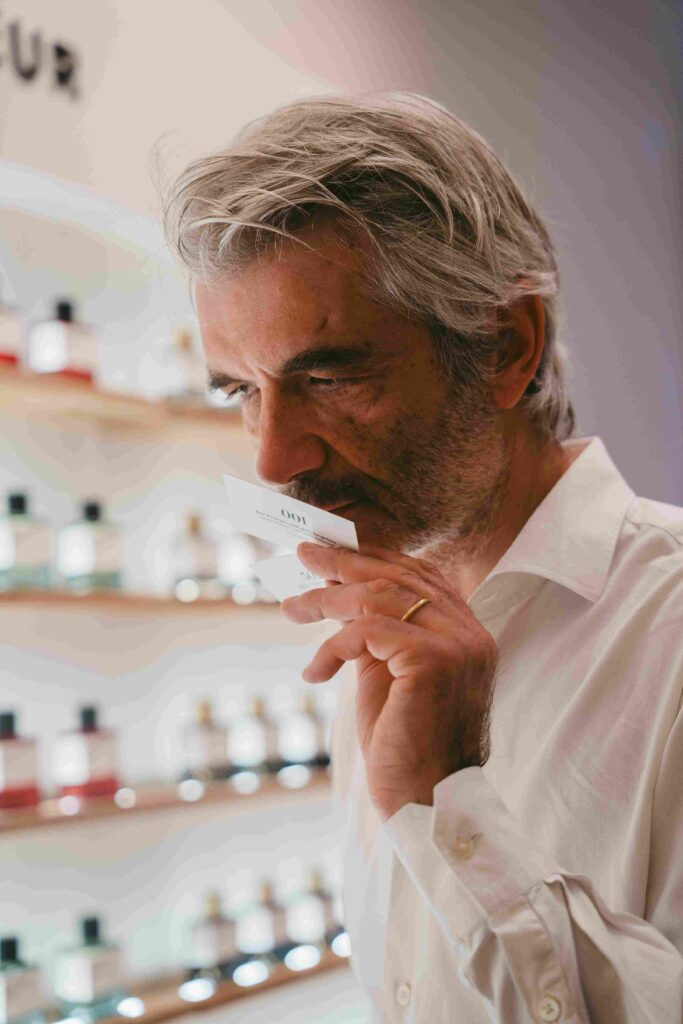
Ludovic works in the travel industry. He is a man who cannot sit still; he needs to engage with other people and their cultures, and to experience the world’s landscapes and scents. Speaking of scents—though he never imagined a career in perfumery—he was already wearing *Jicky* at the age of fifteen. His choice was driven purely by the fragrance itself. He was unconcerned with the fact that Guerlain had infused the formula with echoes of misfortune and a broken heart—the result of a romance with a young, boyish Englishwoman during his studies in England. He made the scent his own. With this legend of fine perfumery in his wake, he set out to discover the world and embark on his own legendary journey. For him, it was “an extra touch of soul that accompanied him through his days.” “I wanted to seek out things that resonated with who I am,” he tells you—a simple statement that reveals how authenticity has always been a constant in his quest for excellence.
Between his encounter with Jicky and the founding of Bon Parfumeur, Ludovic lived a rich chapter of his life defined by extensive travel—at his own pace, guided by the people he met along the way. Early on, he chose sleeper trains over flights from Paris to Dubai—specifically, the kind that cross Russia all the way to Mongolia. On these journeys, he struck up acquaintances with unusual fellow travelers: passing criminals with whom he played cards, and Red Army soldiers—all during a time that gave no hint of the global events to come. At the age of twenty-five, Ludovic decided to travel from Paris to Bombay without flying.
But the driving force behind the creation of the Bon Parfumeur house is… a woman: Isabella. Isabella represents the journey of a lifetime—a journey of the heart. With *Iris Cartagena*, Ludovic sought to capture the memory of meeting the woman who would become his wife in a fragrance; for this avid traveler prefers to bottle his finest memories rather than preserve them in photographs. And it was in Cartagena, Colombia, that their story began—on a New Year’s Eve.
“Cartagena is an absolutely incredible city,” he says. “It is an old city that has retained its authentic character; its extraordinary past is still palpable within its walls.” Cartagena—known as Cartagena de Indias—is a city teeming with life. The architecture of its colonial historic center is a UNESCO World Heritage site. In the past, its wealth was such that it attracted many covetous eyes. Founded in 1533 on a highly prized trade route, it was attacked by numerous pirates, including the famous Francis Drake and the equally renowned Henry Morgan.
The capital of Bolívar, it fuels legends just as much as it creates new ones. In December, the rain stops. Temperatures hover around 25–30 degrees.
“I was in that old city on the Caribbean coast,” Ludovic continues, “at the top of a mansion, at the home of a woman who is quite well-known there—a female, Colombian version of the Great Gatsby. She always throws a huge party for New Year’s. Everyone is welcome. I was with a group of friends. One of them knew Isabella and introduced me to her. We were under the stars, atop one of the three mansions that belonged to this woman.”
In Iris Cartagena, I wanted to capture that exact moment. It is the end of the year, the start of the festivities. Under the stars of Cartagena, the air is warm, people are dressed in white, and I meet the woman who will become my wife.
« We started with a sandalwood-infused iris featuring gourmand facets—without being syrupy. The gourmand aspect wasn’t the main focus, yet it had a place in this encounter, in this fragrance. We then added rum—an incredible, highly textured rum, » adds Ludovic, « and a cocoa note with a rather dark facet. »
To achieve this, Ludovic enlisted the young perfumer Clément Marx, who trained at Robertet New York. “I really crafted the extract based on the image of the end of the day,” says Clément Marx, “when the day’s warm air begins to cool—deep in the jungle, after an excellent dinner. The coffee and the cocoa-scented dessert absorb the jungle’s deep, heavy humidity, mingling with the cold, damp woody notes rising from the forest. A note of rum slips into the scene as the light fades—warm and enveloping.”
The Bon Parfumeur brand actually originated in Colombia. “The lightbulb moment came in 2015,” Ludovic recounts. “I suggested to my wife that we move to Colombia so I could get to know her family and friends. We were living in Cali, the country’s third-largest city—a massive city of two million inhabitants with a very tropical climate, situated at an altitude of 2,000 meters.”
We used to go on *cabalgatas*—horseback rides. One day, we went on a special ride that started in the city and took us up into the mountains. Throughout the day, I took in a multitude of scents. It was an incredible sensory feast: the smell of the horses and the stable, the city’s pollution, the flowers lining the houses just outside the town center, and the fresh-cut grass in the meadow. We then rode through a rather dark forest with strong, earthy undertones before reaching the mountain peak—where a cloud had settled, bringing fresh, aquatic notes—amidst a crowd of people smoking and drinking. It was at the end of that day that I made up my mind: I would create perfumes and make it my profession, weaving my memories into my creations.
Ludovic readily says he prefers scents to snapshots. “I’ve traveled extensively, yet I’ve rarely taken photos. I’m not particularly moved by photographs, but scents transport me—taking me on a journey and then letting me relive it. From my Russian odyssey, for instance, the photos I did take were mostly of the people I met. I still have a picture of the railway worker who was changing the train tracks at the border between Poland and Russia. He had the look of a character in one of Zola’s novels. He was laughing as he worked, because the track gauges in Russia differ from those in the rest of Europe.”
As for Clément Marx, the perfumer loves photography. He dreams of creating a project centered on a photography exhibition accompanied by scents.
In 2025, the *Iris Cartagena 502* eau de parfum was released and became one of the brand’s biggest hits of the year. Why an eau de parfum after an *extrait*? “Many people who loved *Iris Cartagena* wanted a lighter version for daytime wear,” explains Ludovic. “It’s a great success because this woody-musky scent appeals to customers who don’t usually care for gourmand fragrances. With this variation of *Iris Cartagena*, I wanted to capture the feeling of waking up by the sea after a party, alongside the woman who would become my wife. In my mind, we weren’t really in Cartagena anymore; we were on Baru, the large island opposite it. That’s how mandarin and cocoa infusion came into the picture.”
To create this eau de parfum—which is arguably even more addictive than the original *extrait*—perfumer Clément Marx took a different path than the one used for the Iris Cartagena 502 extrait. “The idea was to introduce a sense of lift, propelling the fragrance into the daylight hours. For this eau de parfum, I opened the windows and let the wind enter the composition, blowing across the ingredients. We wanted to create a sense of breath—a quality absent from the *extrait*, which is more nocturnal in character. We sought to introduce a slightly more botanical feel. I also added a sense of movement. Thanks to its addictive freshness—driven by aromatic notes and eucalyptus, an ingredient not found in the *extrait*—this formula makes you want to reapply it throughout the day. The eucalyptus expands the note and opens it up. With the extrait, the experience was more like a cocoon—a bubble in the heart of the forest—something deeply intimate.”
« Even in terms of how the fragrances behave, » the perfumer adds, « the extrait stays closer to the body. Its sillage is closer in terms of both distance and longevity. Iris Cartagena 502 ‘s extrait is ideal for clothing; it can last for months. The eau de parfum, on the other hand, reveals itself more on the skin, opening up more. » Its lightness is more expressive.
Our verdict:
Two fragrances sharing the same story. One is highly expressive, the other more intimate. Both are incredibly addictive. The extrait’s bold personality makes it an ideal companion for the winter months, while the eau de parfum wears effortlessly year-round—and, as Clément Marx puts it, makes you want to reapply it several times a day.

