Demandez à des gens qui n’ont jamais étudié les parfums ce que représente Siesta, le dernier parfum de Ramon Monegal. Certains vous diront que c’est un “parfum d’après-midi”, d’autres, qu’il oscille entre un côté solaire, chaud, méditerranéen et une facette plus sombre amenée par du bois, du cuir qui invite à se relaxer au coin du feu. Ces gens auront tout compris au dessein du parfumeur qui signe là un bel éloge à la sieste.
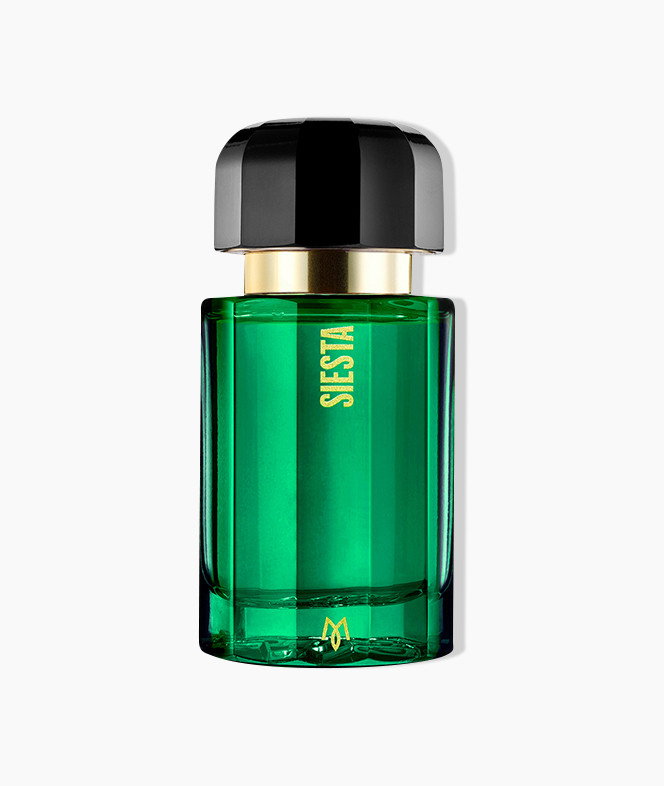
“Les signes du sommeil arrivent avec les effluves du citron et du miel dans un lit de bois de cèdre. Jasmin et vétiver nous endorment avec la berceuse chantée par l’iris. Nous nous réveillons revitalisés par la vigueur du cuir et l’énergie des épices.”
Mais qu’est-ce que la sieste pour un artiste tel que lui, issu de la plus grande famille de parfumeurs d’Espagne ?
« Le farniente atteint son paroxysme avec cette icône que nous appelons SIESTA. Un luxe méditerranéen synonyme de liberté. On rêve, on réfléchit, on se repose ou on recherche le plaisir. Il n’y a pas d’horaire, il n’y a pas de protocole, la seule règle à ne jamais enfreindre est : Ne pas déranger. «
Profitez d’un instant de pause pour découvrir notre interview du parfumeur, en anglais.
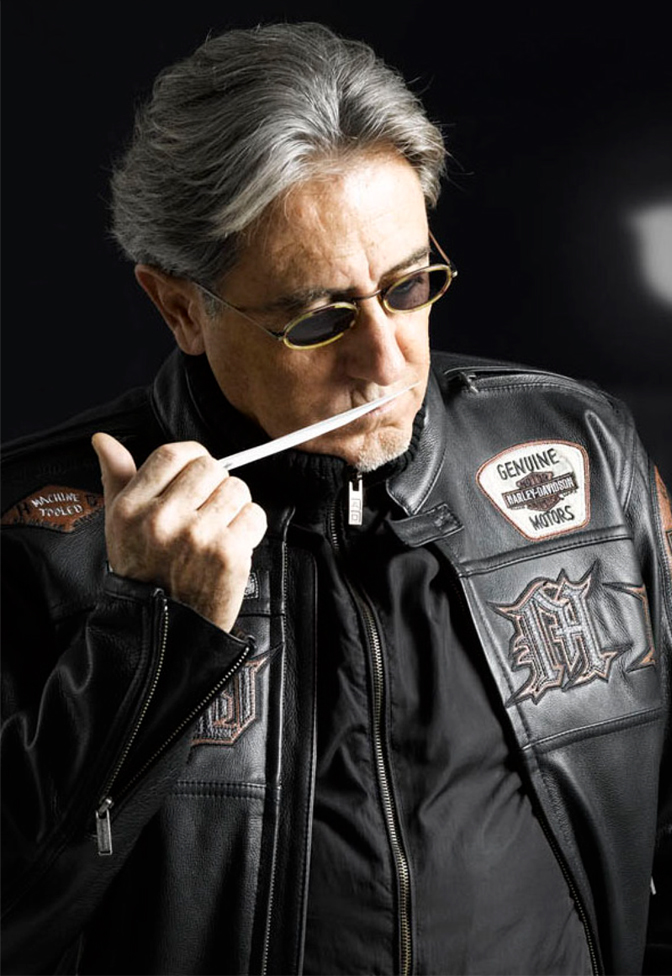
Dear Ramon,
Siesta is a beauty. I called it a ‘time stopper’ because it halts you when you smell it. It’s a very comforting and soothing fragrance. It makes you want to snuggle between satin and velvet and forget the frantic pace of work.
Why did you choose to create such a fragrance? How did the idea for Siesta come to you?
I wanted to reclaim, interpret, and explain the olfactory experience of a siesta. The siesta was invented in the Roman Empire; the name comes from Latin « sexta, » which was the sixth hour of the workday and the moment of rest (‘reset’) to gather energy for the second part of the day. It’s a Roman invention, not Spanish or Mexican, and it was intended for hardworking people, not for lazy ones as many people believe. It’s just a moment of disconnection, just long enough to enter the dream metaverse, escape, and reset. I felt the need to invent a new scent that would make me feel well-being and renewed spirits.
Lemon, honey, and cedarwood are like treats for the nose, perfect for facing winter. Interesting top notes. Where did you draw inspiration for them?
For their values! Lemon represents energy and vitality. Honey signifies sweetness and happiness, both essential for well-being. And cedarwood embodies strength and resilience, always good for facing any circumstance or attitude.
Can you tell us how you created Siesta?
I imagined a script based on the pleasure of aesthetics, good proportions, the constant renewal of nature, and the sensuality you can capture in the world of dreams. Based on the script, I chose different ingredients for their values and combined them to define the olfactory Image of renewal.
Who is Ramon Monegal in your own words?
I’m a perfumer by trade, an olfactory communicator, and a perfume guardian by my grandfather’s request. I belong to the fourth generation of perfumers in the Monegal family. I trained in Geneva, Grasse, Paris, and Barcelona under the guidance and noses of great perfumery masters like Jordi Pey, Carles, Bourdon, and Gavarry. Of Mediterranean origin, I’m a naturalist, independent, free, artisan, a storyteller of olfactory tales, a defender of olfactory image, and the language of perfume. I have three children, Oscar, Laura, and Hector, whom I’ve trained to continue the Monegal legacy, my primary goal. My showroom is in Barcelona, my hometown. My raison d’être and my difference lie in uniting the Arab perfumery culture, present in Spain for over seven centuries, with the Western Mediterranean perfumery culture.
You come from Spain’s most important perfumery family. How do you manage to find a balance between tradition and modernity?
I believe tradition, rooted in culture, experience, and nature, provides a strong and reliable foundation for composition. But in my time, during my evolution, and in my way of composing and understanding perfume, I’ve continually introduced modern molecular and structural elements to balance and adapt my olfactory images and perfume language to today’s attitudes.
Do you remember the day you decided to become a perfumer?
It was a summer day in 1971 when I had to choose between continuing my studies in architecture at university or dedicating all my time to the family perfumery trade.
What other career would you have liked to pursue if you weren’t a perfumer?
Without a doubt, I would have completed my architecture degree.
What was the first scent you fell in love with?
The scent of the sea! From as far back as I can remember. It’s an unforgettable fragrance of good times, experiences, and emotions.
And what was the first fragrance you fell in love with?
It was in 1971 (I was 20 and in perfumery training), and I was captivated by Chanel 19 by Henri Robert. I also liked the sillage of the original Shalimar extract by Jacques Guerlain.
And the most recent one?
The Golden Age of Perfumery ended many decades ago. Industry, marketing, and design put an end to the art. Modern perfumery is predictable, unoriginal, and very accessory-oriented. It’s effective but lacks that personality and freedom that used to enamor you.
This summer, I spoke with a French perfume editor who explained that new generations were very interested in vintage perfumes. Therefore, they are reviving great classics of French perfumery. How do you see the Spanish market and the new generations in this regard? »
Good classic or vintage perfumes (more glamorous) have always been and will continue to be a great source of inspiration for perfumers. The Spanish clientele of the new generation is ready and eager to be surprised with new proposals, with different paths from the monotonous trends, and it’s clear that the classics themselves (unfortunately distorted by IFRA) or rather their reinterpretations are a good response to their interests.
 Flannie