Smelling Beyond Beauty

The term ‘art brut’ refers to works of art created by individuals with no formal training in art who lived on the fringes of society.
Germany played a key role in the history of Art Brut thanks to Hans Prinzhorn’s psychiatric collection. Located in Heidelberg, this world-renowned archive was compiled by the psychiatrist in the early 1920s. The collection directly inspired modern artists such as Paul Klee and Max Ernst, and later Jean Dubuffet when he coined the term ‘art brut’.
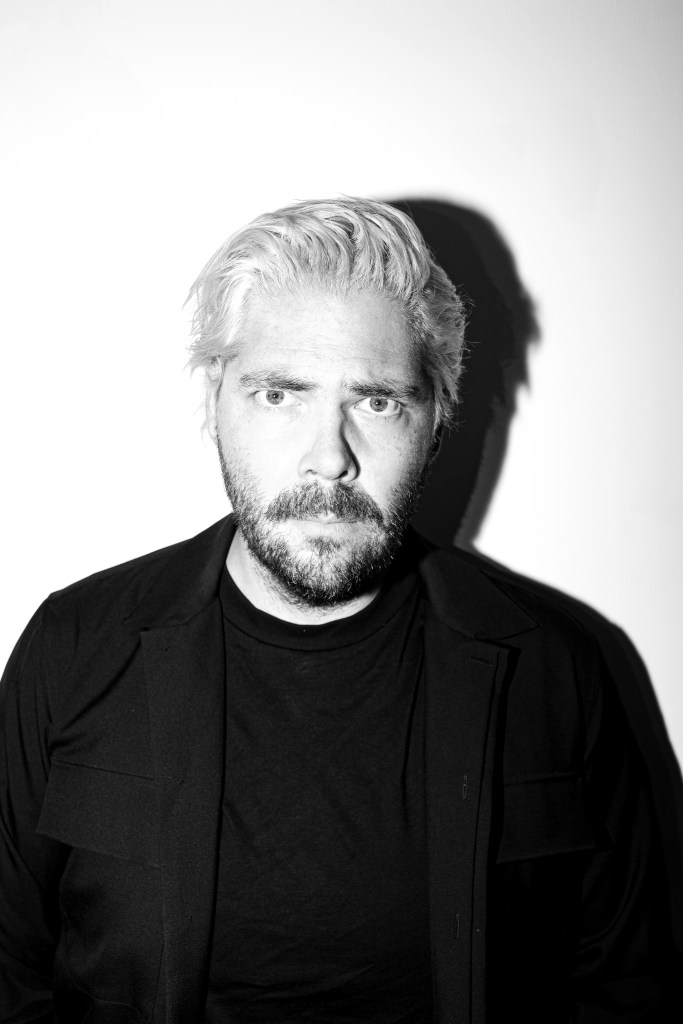
Today, Art Brüt is an independent niche house of perfumes founded in Berlin by Daniel Matousek, a fashion photographer. His perfumes are the result of an untamed, almost childlike curiosity that slips away from the rules of convention, Daniel says. “We flirt with dilettantism, that glorious incompleteness that liberates us at our core. Irony is our means to an end in a world that overturns itself daily.”
With unfiltered irony, this professional photographer presents his snapshots of life in the form of fragrances. From « Je ne regrette rien » to « German Angst, » Art Brüt offers—with a touch of humor—scents with bold, uncompromising personalities; yet, beneath it all, one senses the deep tenderness that dwells within Daniel.
“Daniel is an incredible guy,” confirms perfumer Anne-Sophie Behaghel from Flair Paris, who created German Angst. “I adore him. He is intelligent and sensitive. He thinks deeply and doesn’t hesitate to embrace long stretches of solitude to focus and work with words. You can sense a thoughtful strength emanating from him—right through to his perfumes.”
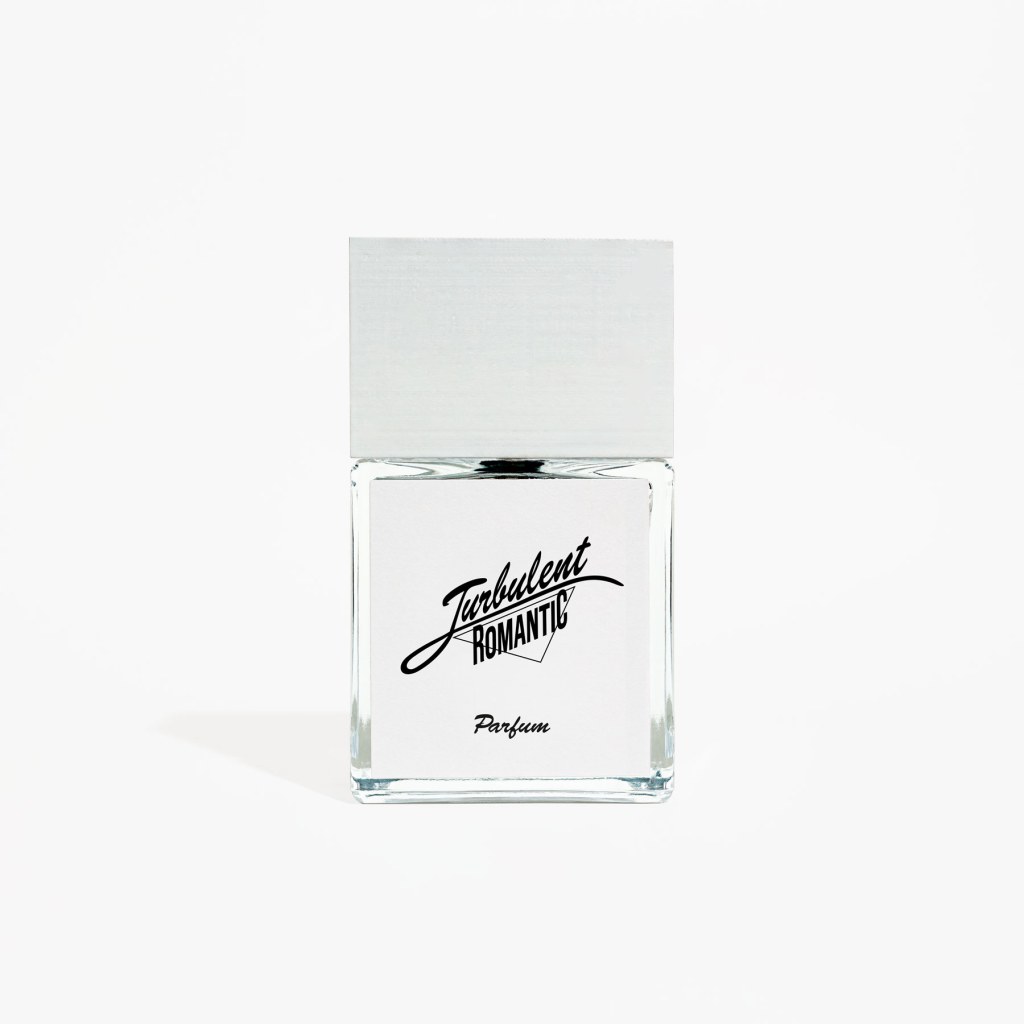
Conversation with Daniel
Dear Daniel,
Could you tell us the story behind ART BRÜT?
ART BRÜT began as a very personal endeavour. I grew up surrounded by cosmetics because my parents ran a company in that sector, so scents were always part of my everyday environment. Photography has always been a major part of my life and remains something I love deeply. But over time, I realised that photography is just one part of a much larger story that I want to tell.
Perfume, by contrast, occupies a space that is both intimate and fleeting. Its language is not captured in light and shadow, but in memory, in fleeting sensations, in the quiet corners of consciousness where thoughts and emotions meet. A scent can reveal the underlying currents of desire, melancholy and longing that shape our experience of the world. Unlike a photograph, which presents a fixed image, a fragrance invites endless interpretation. It is elusive, almost metaphysical, and yet profoundly human. In this sense, a perfume can be a mirror to the soul, a fleeting revelation of the inner life that cannot be pinned down or contained.
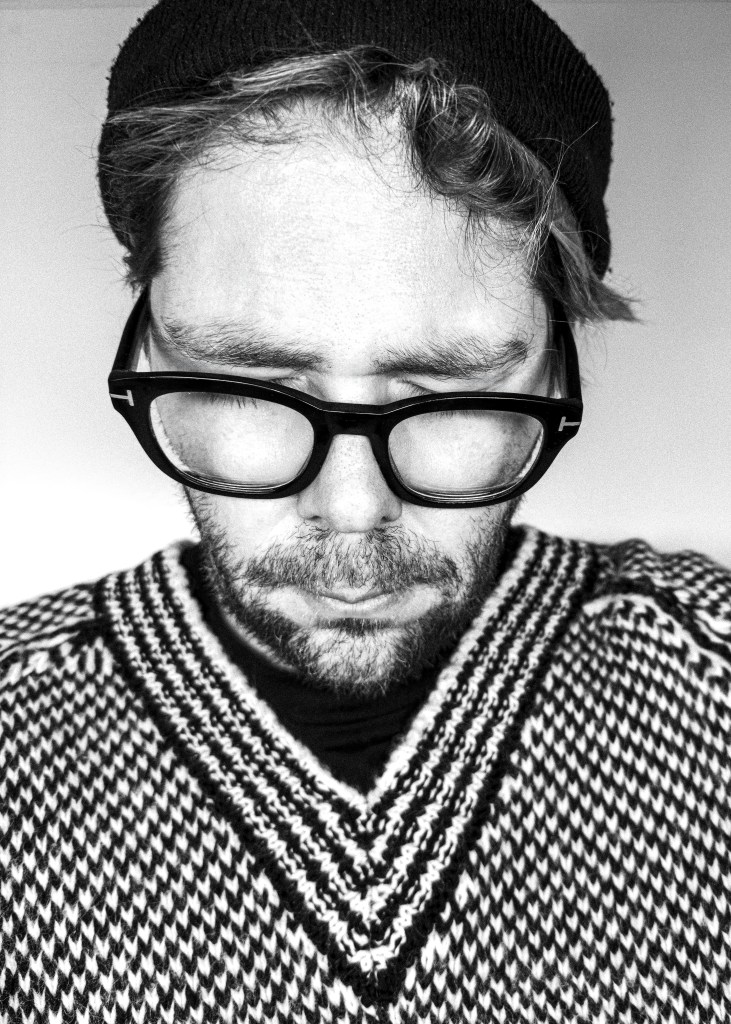
ART BRÜT was born out of that understanding. The brand explores the beauty of everyday life—its contradictions, melancholy, humour and intensity. Our fragrances are not designed to be perfect or comforting in the traditional sense. They are meant to feel alive, sometimes unsettling, sometimes poetic.
And the culture of German perfumery?
Germany actually plays a very significant yet often underestimated role in the history of perfumery.
The most obvious example is Eau de Cologne, which was created in Cologne in the 18th century. Although its creator, Giovanni Maria Farina, was Italian, the fragrance became a defining German export and shaped the entire category of fresh citrus perfumes.
Later, Germany also became extremely important for the chemical and industrial aspects of perfumery. Many of the key aroma molecules used in modern fragrances were developed by German chemical companies in the late 19th and early 20th centuries.
But culturally, Germany never developed the same romantic mythology around perfume as France did. German culture is often more analytical and pragmatic. In a strange way, that tension between emotion and structure is something I find very inspiring for ART BRÜT.
You are a fashion photographer. When did you notice you wanted more than visual expression?
Photography taught me a lot about aesthetics and storytelling, but it is still a very external medium. You see an image, you react to it, but it remains outside of you.
Perfume works differently. It is invisible and intimate. It becomes part of your body and your personal memory. A scent can suddenly transport you back to a moment from twenty years ago with incredible intensity.
When I started thinking about fragrance in that way, I realised that perfume could reach a much deeper emotional layer than images alone. That was the moment when I began to see perfumery not just as a product category, but as an artistic language.
These scents are not just attitudes; they are a rebellion against the ordinary…
For me, the ordinary is not something boring to escape from. In fact, that’s where life really happens.
But modern perfume marketing often turns everything into a fantasy – perfect beaches, beautiful people, eternal happiness. I find that narrative very artificial.
ART BRÜT is interested in the real emotional landscape of life: melancholy, longing, confusion, excitement, small moments of beauty. The scents are not meant to escape reality, but to reflect it.
In that sense, the rebellion is not against life itself, but against superficial storytelling.
You work with perfumers in Paris. Why did you choose Flair?
Paris is still the historical center of artistic perfumery, and I wanted to collaborate with people who approach fragrance with a strong creative sensibility.
Flair impressed me because they combine technical precision with genuine curiosity. They are very open to unusual ideas and abstract concepts. When we discuss a project, the conversation is never just about ingredients—it’s about atmosphere, emotion, and narrative.
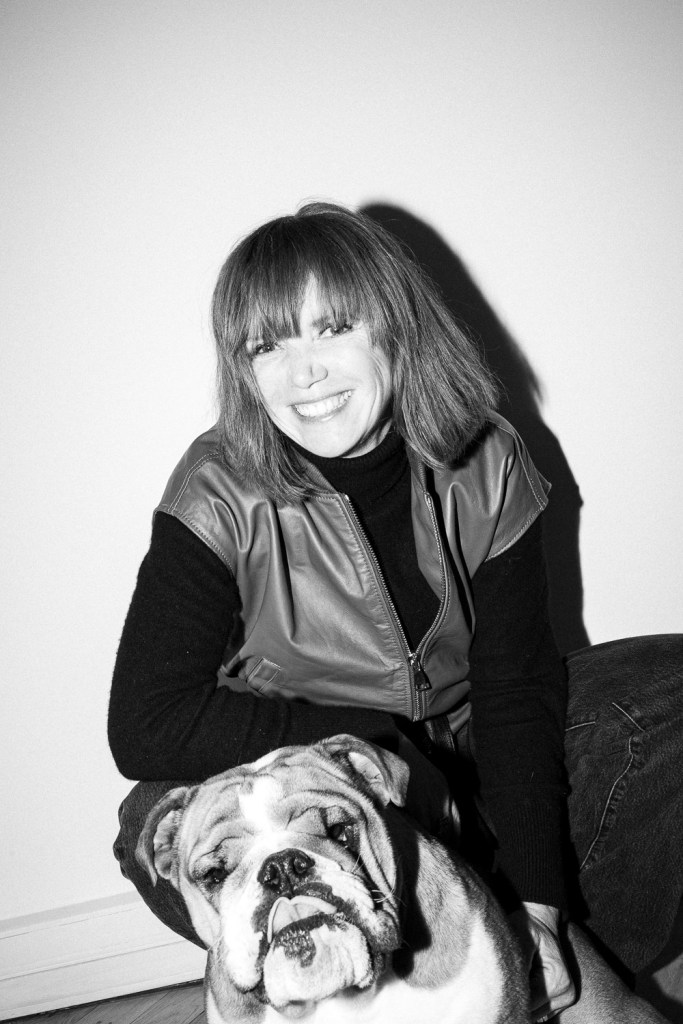
That level of dialogue is essential for the kind of fragrances we want to create.
Let’s talk about two of them, really interesting perfumes that describe a certain “German way of life” and a “pied de nez” to the actual society.
German Angst: a strangely beautiful awareness of uncertainty
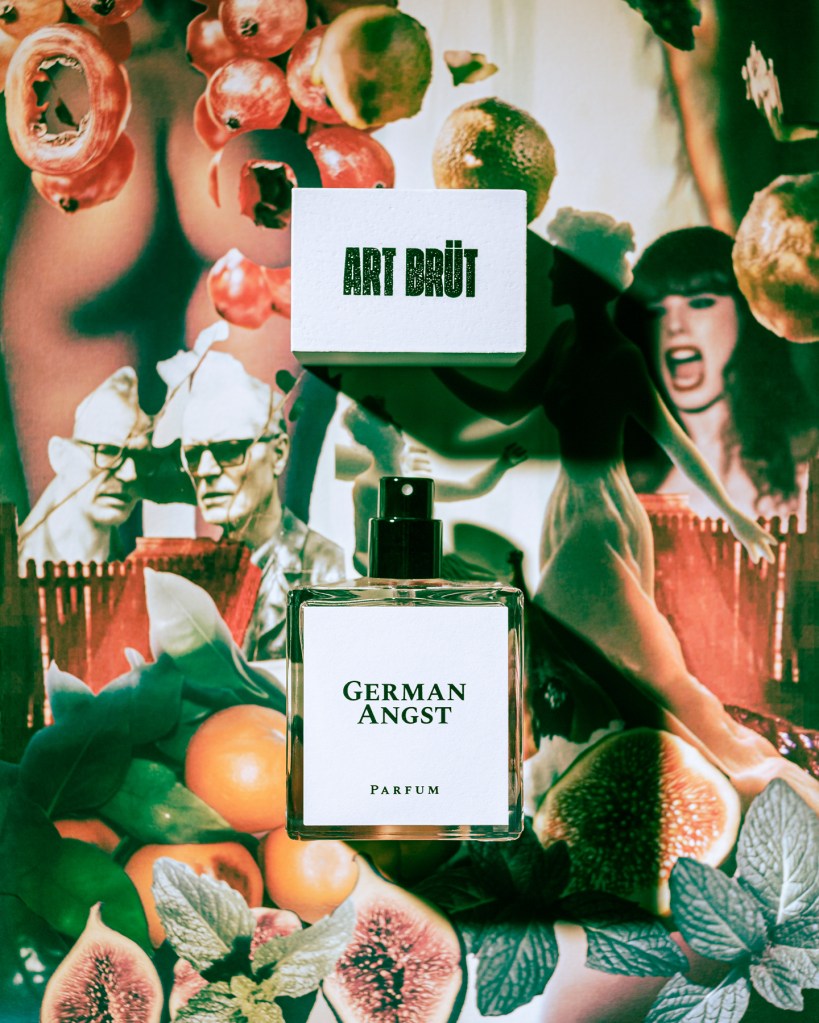
German Angst was created by Anne-Sophie Behaghel from Flair Paris. Anne-Sophie has a very intuitive and poetic way of working with contrasts, which was perfect for this project as German Angst was quite conceptual. The idea was to translate a cultural and emotional stereotype into scent.
“German Angst” is a term that describes a certain existential unease—an awareness of uncertainty, of the fragility of stability. But it also has something strangely beautiful and introspective about it. So the fragrance needed to feel slightly tense, introspective, and atmospheric, rather than traditionally “pleasant.”
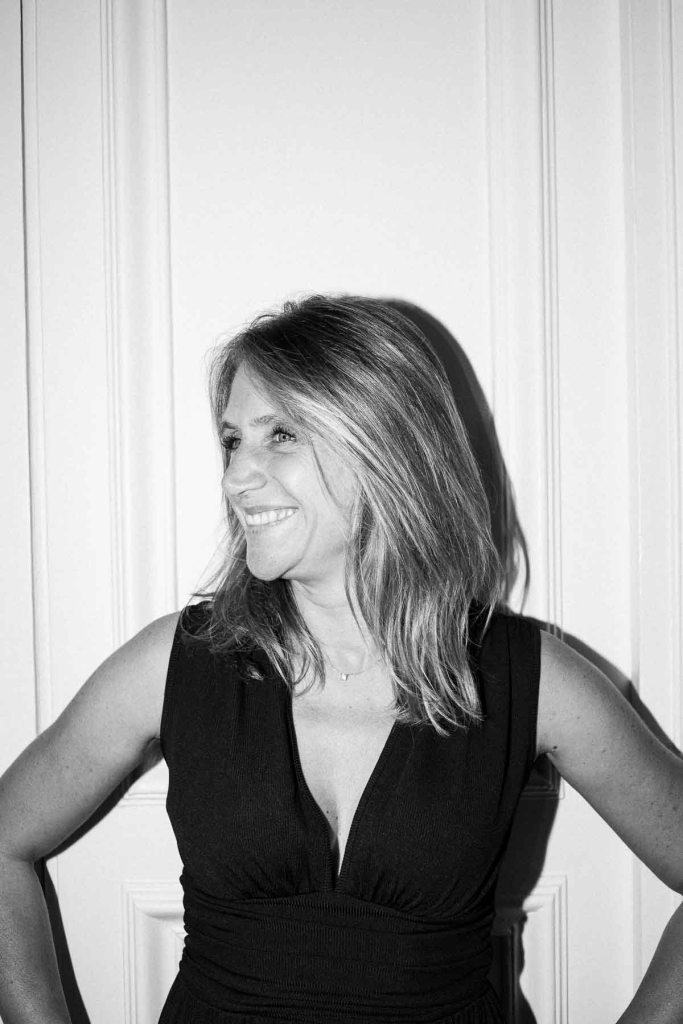
« To create “German Angst”, » Anne-Sophie continues, « I instinctively drew upon an old memory: my first trip to Germany. I was fifteen. My exchange partners were between sixteen and nineteen, and we went to see *Schindler’s List* at the cinema together. I already knew back then that I wanted to become a perfumer; I was already studying raw materials. Whenever I visited an exhibition or saw a movie, I couldn’t help but associate specific raw materials with everything I saw. I did the same thing during the film. We left the theater at 11 p.m., deeply affected; people in the audience were weeping. Outside, we discovered there were no lights—the streetlamps, shop signs, and traffic lights were all out. A massive power outage had hit the entire city. We were plunged into total darkness. After a film like that, the effect was striking. That memory remains so vivid today that I drew inspiration from it to create my formula—which I spontaneously named “Angst is Back”—and Daniel approved it on the very first try. »
How did you manage to capture that sense of dread—that “Angst”?
I built “German Angst” around patchouli—a very modern patchouli, neither earthy nor camphoraceous. For the dark element, I added castoreum, which is slightly reminiscent of leather. Since I wanted a light to break through that dread, I then chose juniper berries and mint. The combination creates a rather cold clarity.
Did you already have that combination of notes in mind when you saw the film at age fifteen? Absolutely. Patchouli, juniper. I wasn’t familiar with castoreum yet, but I had already drunk gin and tonic by the time I was fifteen… I admit it. For the rest of the formula for “Art Brut”, I chose to add incense—a peppery incense—as well as pink pepper, with a sandalwood and musk base. My aim was to create a black-and-white base.
⸻
Chasing Ghosts: childhood fading away
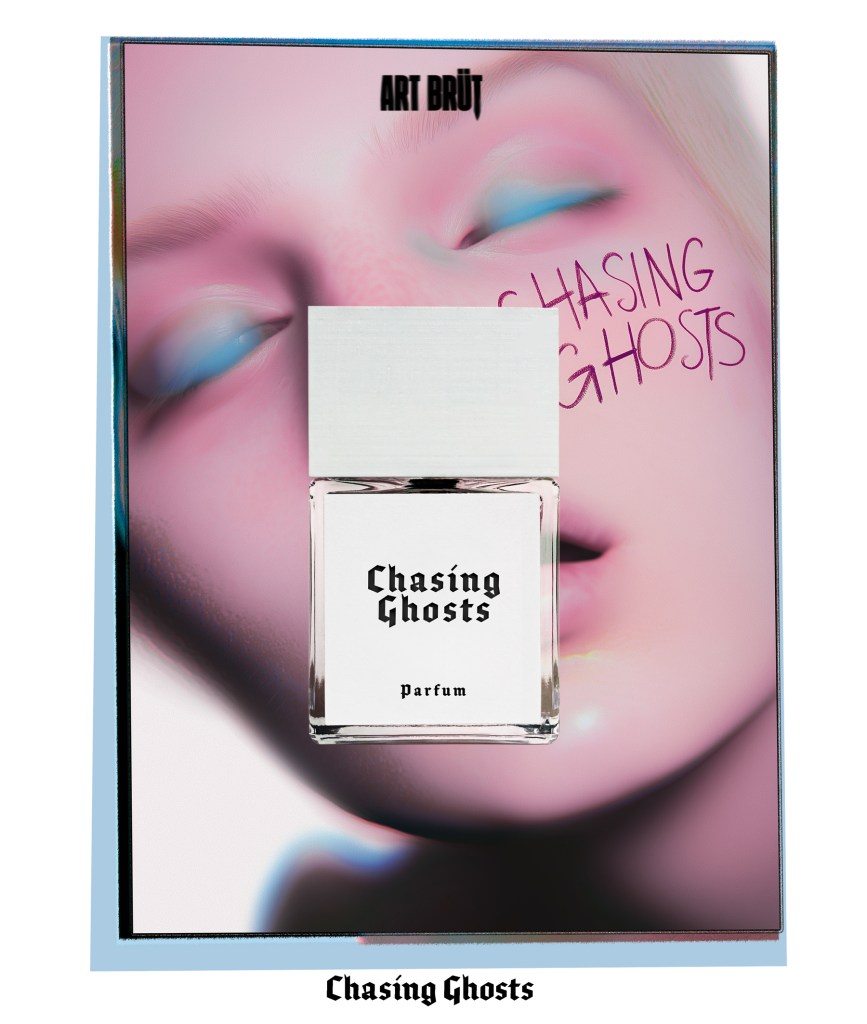
Chasing Ghosts was created by Margaux Le Paih Guerin.
It contains a cannabis note that brings a very particular atmosphere: slightly green, slightly smoky, slightly nostalgic. Like Daniel’s childhood that is slowly fading away…It works together with tea and rice to create a comforting, intimate warmth. The combination was chosen to convey memory, introspection, and the feeling of pursuing something just out of reach, which adds an emotional depth to the fragrance.
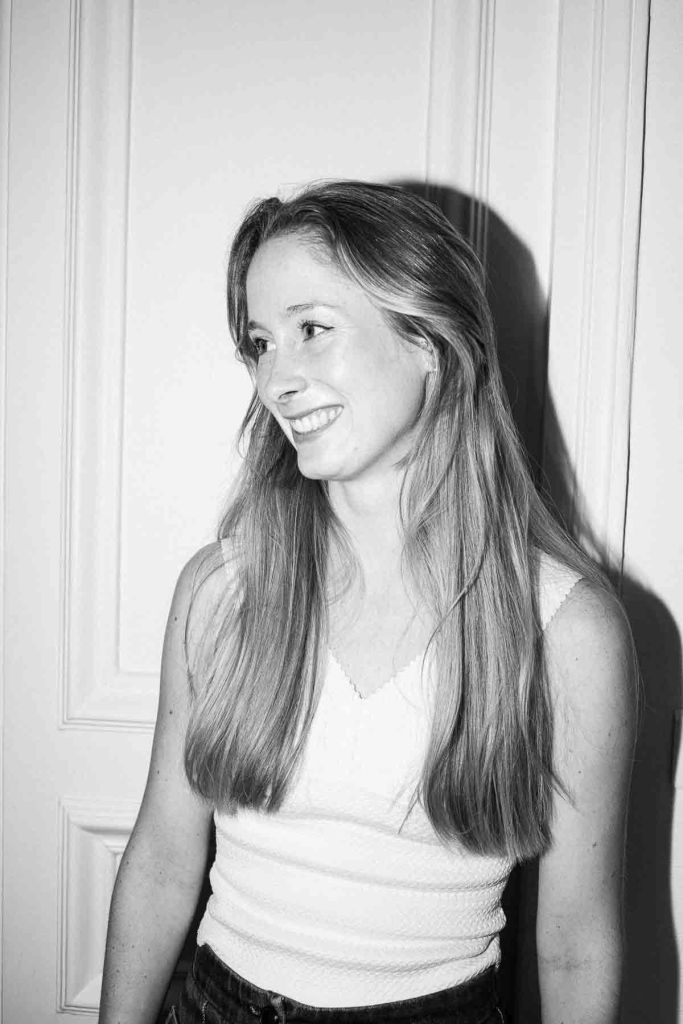
« I crafted a fragrance that captures the very nature of memories, » explains Margaux. « It is a pursuit of the intangible. The notes I chose included rhubarb—with a hint of marijuana—grapefruit, pink pepper, and a very prominent rice note. I selected many ingredients that were conceptually ‘white’ to evoke these ghosts of the past, using white musks and the enveloping feel of cashmere. »
Rice, cannabis, and orange blossom introduce a slightly « biscuity » quality—evoking a Proustian *madeleine* moment. The goal was to make these ghosts appetizing and to create novel olfactory pairings with Daniel’s paste—which is very raw, much like his brand name, and possesses a disruptive edge.
The base note is quite universal, thanks to the white musk; it echoes the image of those airy, white, floating ghosts. The weed represents the demons we might carry around with us, so I think that makes for a really interesting dynamic.
 Flannie