No novel is innocent
Bovary, a narrative ballet directed by Christian Spuck, will soon be showing at the Deutsche Oper in Berlin.
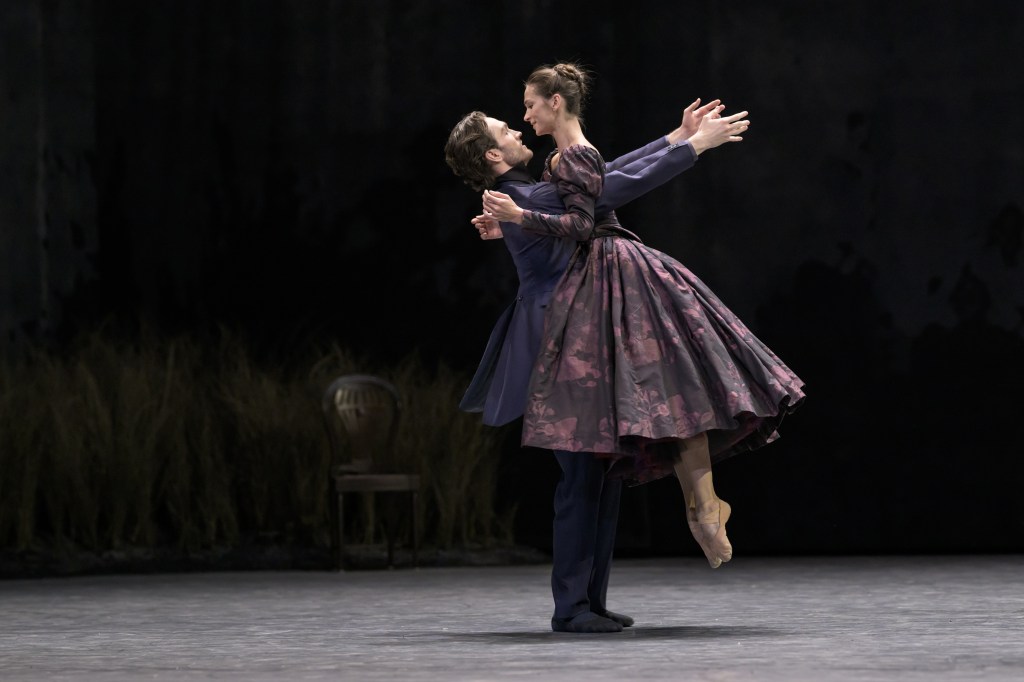
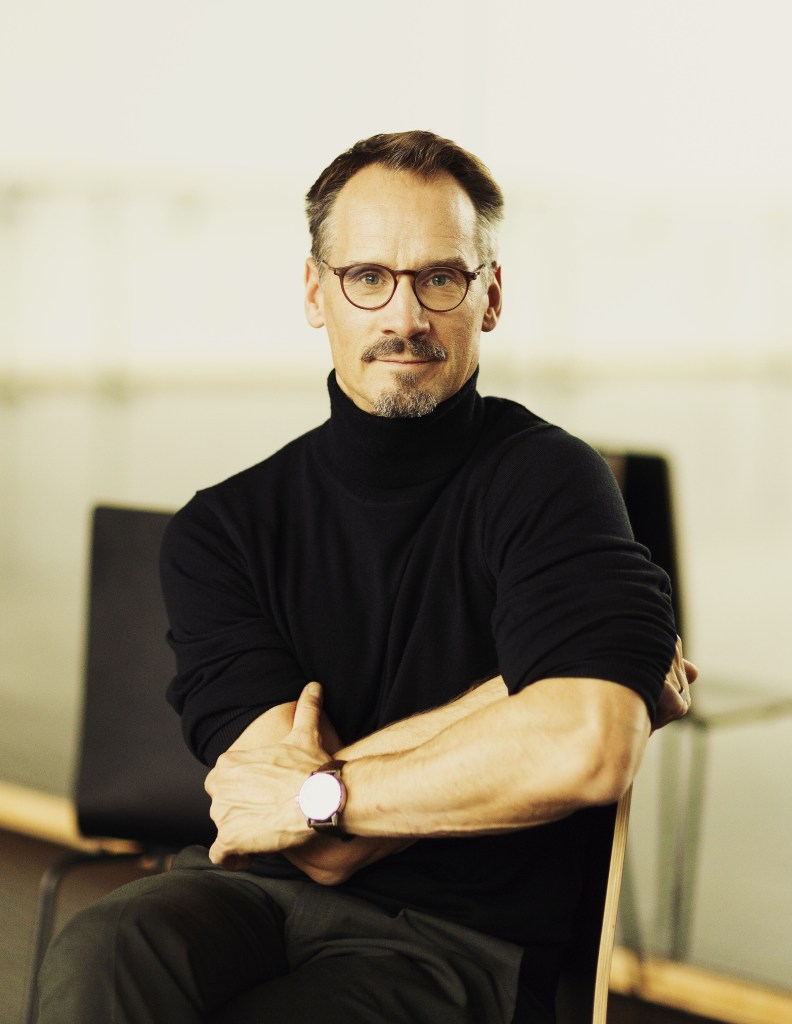
From 25 September to 10 October, Christian Spuck will direct a new production of the story of Emma Bovary’s longing for an iridescent life, written by Flaubert. Bovary was the first ballet Spuck created upon his arrival as director of the Staatsballett Berlin in 2023, particularly interested in the language used by Flaubert in Madame Bovary, and believes that people today are busy staging their own lives.
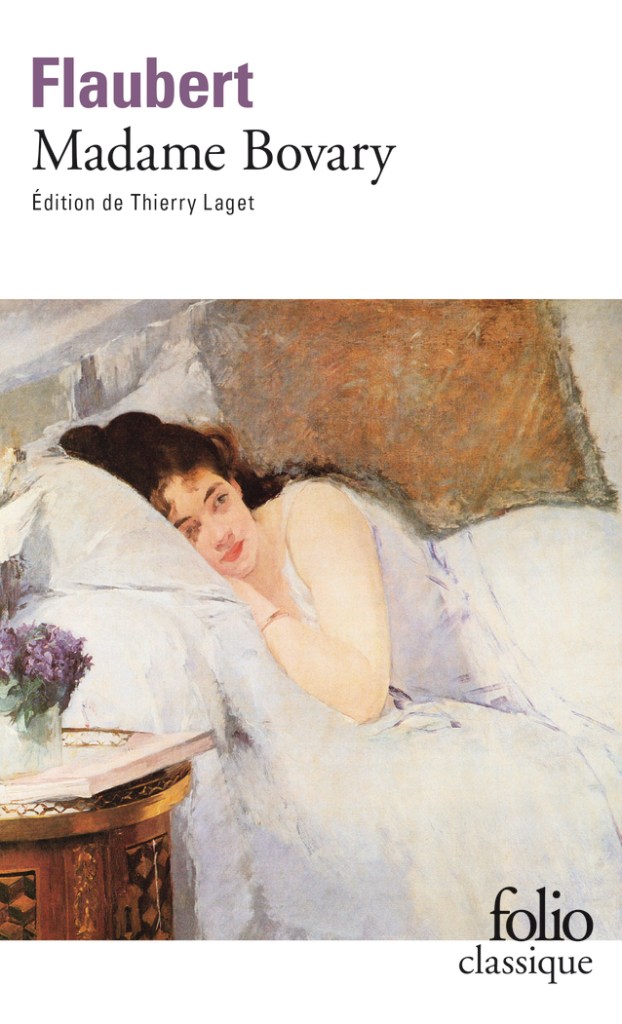
As the French publishing house of this classical roman would say:
“It is the story of an unhappily married woman, of her mediocre husband, of her selfish and vain lovers, of her dreams, her fantasies, and her death. It is the story of a narrow-minded, devout, and bourgeois provincial world. It is, too, the story of the French novel. Nothing in this portrait was likely to shock Second Empire society. Yet—inexorable as a tragedy, flamboyant as a drama, biting as a comedy—the book wielded a formidable weapon: style. For this very crime, Flaubert found himself facing a criminal trial.
No novel is innocent; this one least of all. To read *Madame Bovary* in the twenty-first century is to confront the scandal of a work as sincere as it is imperious. It is an aggressive, corrosive book; its irony affronts all our values—and literature itself, which has never truly recovered from it.” (Gallimard)
A stage is a space for sharing a story that has been read, seen and heard many times before. Nevertheless, we hope to discover something new about this familiar story in a few days’ time. Ballet dancers Weronika Frodyma, Polina Semionova and Michelle Willems breathe life into Emma’s character.
Staatsballett Berlin (SBB) Who is Emma Bovary for you?
Weronika Frodyma (WF) When I read the book, I was a little surprised by what I read. [Emma Bovary] is very selfish or self-centered, but I could also identify with so many aspects of her personality. I thought, «This is how I feel; this is how I think.» I had to ask myself, «Am I Bovary?» On the other hand, I got annoyed with her: «Girl, this is just your fantasy. This is simply not reality. You can’t expect that to work. You can’t be so selfish and belittle all these people for your own pleasure.» But at the same time, I sympathize with her. Reading the book was a journey of discovery. You definitely start questioning yourself, your desires, and dreams.
SBB Which character traits has Christian Spuck asked you to emphasize?
WF He didn’t really specify. He didn’t create a psychological profile of her. It developed more in different situations we rehearsed. He gives situation-specific hints. He presented her as this woman who exists between dreams and reality. That’s a very important aspect of her character, that she is so frustrated with her life because it simply doesn’t match the fantasy she created for herself.
SBB How do the spoken passages from the book influence your dancing?
WF The text is sparkling like the bubbles in a champagne glass. The poetry of the dance contrasts with the words. They highlight the drama of the situation; it gets under your skin. And when I start to dance and hear the music, all senses open up, and then these sentences from the book resonate directly with me. They go deeper than if you were just reading them on paper.
SBB What do you think is the motive behind her suicide?
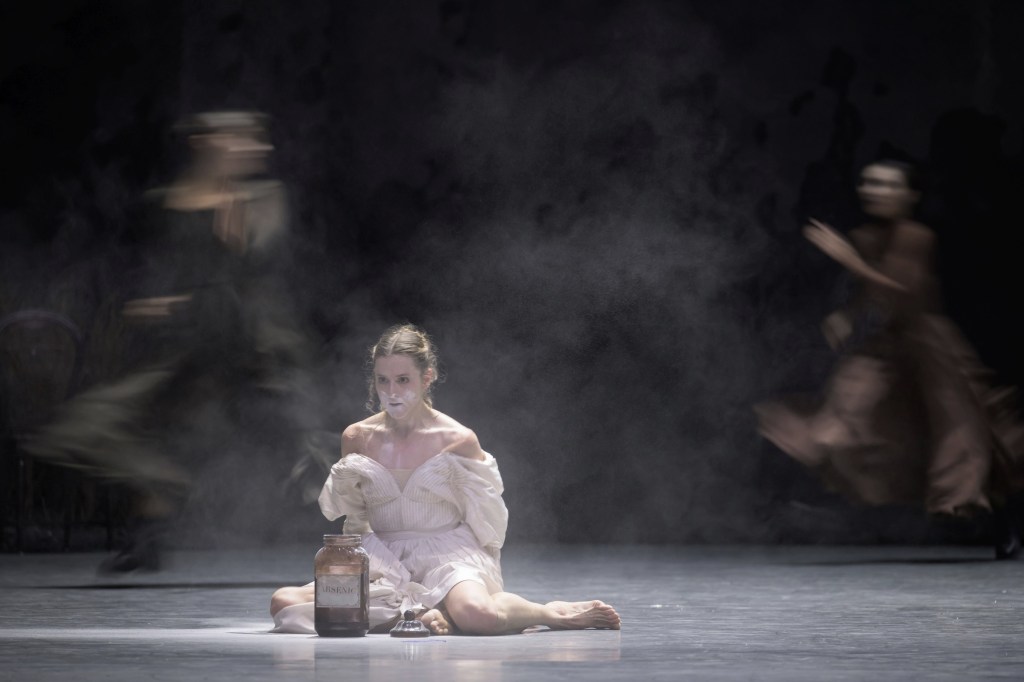
WF Her suicide is the «easy» way out of her problems; a selfish act that strongly shapes her character throughout her life. A quick way to satisfy her own needs and desires, to end her pain, her fear, the unbearable weight of the pressure on her, and the inevitable confrontation with reality. Without thinking about how it could influence those around her. Just as she always did… Everything is based on lies and money she doesn’t have. And on pretending to be someone she is not. It’s a way to not have to see herself in the mirror, without the money, the beautiful clothes, the unattainable dreams and passionate lovers. Simply the plain and unspectacular Emma she doesn’t want to be.
SBB Something that is not unusual when you look at today’s obsession with social media.
WF It’s something human in general, not just in social media. I think social media takes it to another level. Even before there were social media, we all somehow thought that we had to create a certain image of ourselves: be strong, reliable, always cheerful, even when suffering. So there are certain masks we put on to get through a day professionally. But then there is of course this absolute extreme in social media. And I think that’s closer to what Emma did: all these clothes, all these filters, how to look, what to own, what to do. And none of it is based on reality. It’s just a beautiful construction without any foundation.
Quoted from the Ballet Paper No. 1. The conversation was conducted by Michael Hoh.
THE COSTUMES
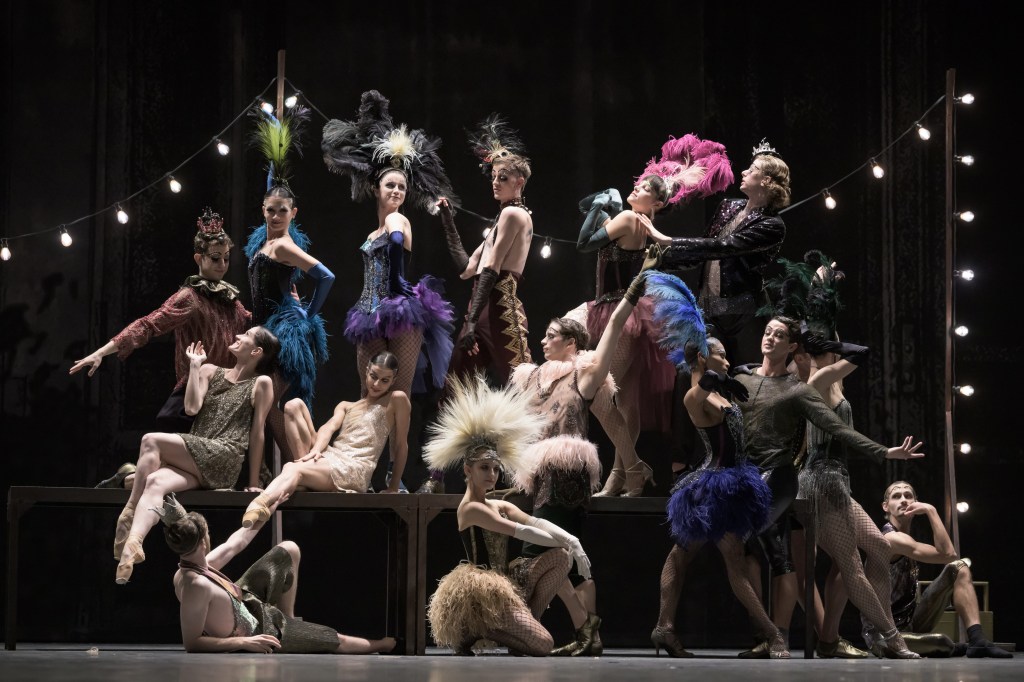
Bühnenservice Berlin (Stage Service Berlin), seven weeks before the premiere of Bovary: Two ladies stand before a heap of colourful ostrich feathers, rhinestones, and tulle, arranging them in different variations and examining the interplay of materials. Costume designer Emma Ryott is there to oversee the creation of costumes for the production of Bovary. Together with Anita Fremy, a milliner at the Opera Foundation in Berlin, she contemplates the elaborate headpieces needed for the scene called the «Revue». In this scene, the protagonist Emma Bovary, a country doctor’s wife, visits the theatre in the nearest town of Rouen with her husband and is swept away by a dazzling world as a contrast to her rural life. The costumes play a significant role in telling this story.
Just under a month before the grand premiere, almost all dresses are either completed or in the process of being made. Over a hundred tailor-made gowns are made just for the first cast. The second cast must also be ready as last-minute cast changes are always possible. The costume team is already in the final stretch of this production.
The costume design process begins right at the beginning of a play’s development. «About a year and a half ago, we met for a brainstorming weekend,» says Emma Ryott. «We», meaning choreographer Christian Spuck and his artistic team, including dramaturg Claus Spahn, set designer Rufus Didwiszus, and costume designer Emma Ryott. «This weekend was very focused; we had many conversations, looked at images, reflected on the book. And then we pooled our ideas and saw if we were moving in the right direction together.» The resulting overall concept was carried into the Stage Service workshops over the following months and brought to life there.
At the Bühnenservice Berlin, Germany’s largest theatre service provider, all costumes for the Opera Foundation in Berlin are made – for the three operas and the State Ballet Berlin. In the workshop and administration complex at Ostbahnhof, theatre dreams come true. Around 260 employees work on an area of 25,000 square meters, from set construction to costume making to personnel services. Emma Ryott can fully rely on the staff there, six costume masters, and up to four milliners working on the production. «It’s a great teamwork, and it’s important that we trust each other and can have a dialogue.» The Englishwoman is internationally active as a costume and set designer. Currently, alongside the premiere in Berlin, she juggles three productions in Canada, England, and Dresden. She has been collaborating with Christian Spuck since 2003 and the production of Lulu. A Monster Tragedy. She visits Berlin for several days and weeks for Bovary, attends fittings with the dancers, and exchanges ideas with the team about the progress of costume making.
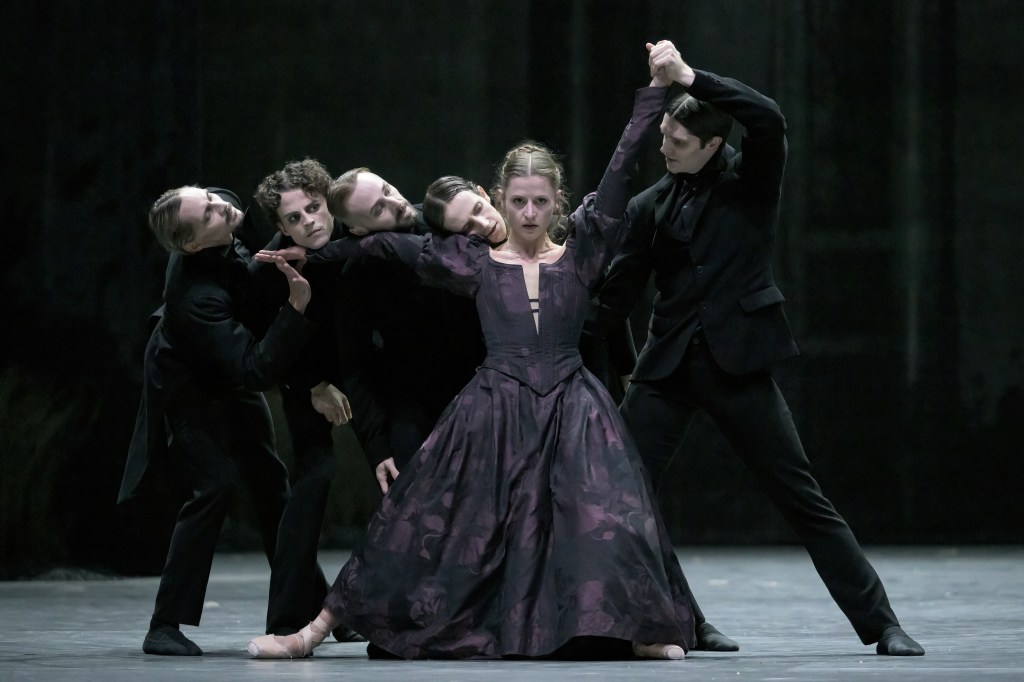
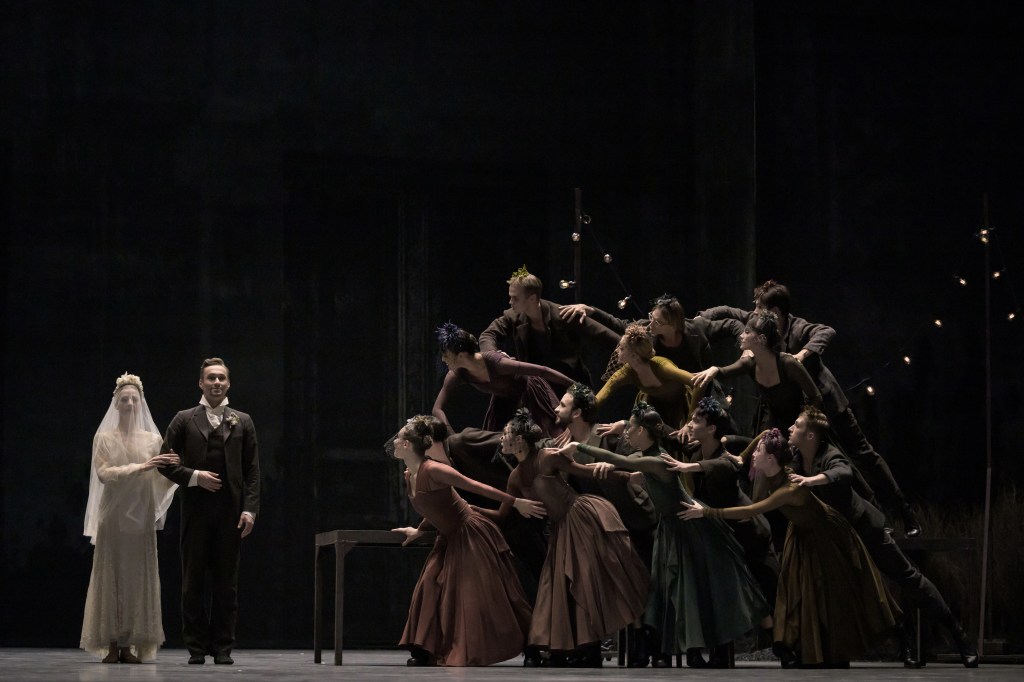
What are her guiding ideas for the different costumes? «The costumes are loosely set in the 1850s. It’s sort of my version of 1850. Historical costumes were more detailed. Here, there’s less clutter.» Modern, simple cuts are also seen repeatedly, supporting the breaking of the narrative structure. «The abstract and historical costumes are connected through a shared colour palette.» Additionally, the different life worlds and their garments contrast: In the village of Yonville, earthbound people live in peasant clothing; at the ball, the refined and cultured upper class is evident, and in the theatre scene, a fantastical world is experienced.
Besides the thematic inspiration, practical questions are also significant because: «Everything has to move.» The clothing must provide great freedom of movement for the dancers, while the expansive movements can also create beautiful effects with swaying fabrics. For a skirt, 15 metres of fabric can be used. For a successful performance, no effort is too great for the costume designers. To make the suits of the village population appear old and used, for example, a multi-day process is used. The new jackets are moistened and hung on mannequins. To create folds and bulges, the sleeves are tied with cords, and stones are placed in the pockets. After a few days, the suit is dry and seems to have aged by several years.
«The costumes tell a story. It’s always about telling a story.»
Quoted from the Ballet Paper No. 1, author: Corinna Erlebach
Coming soon
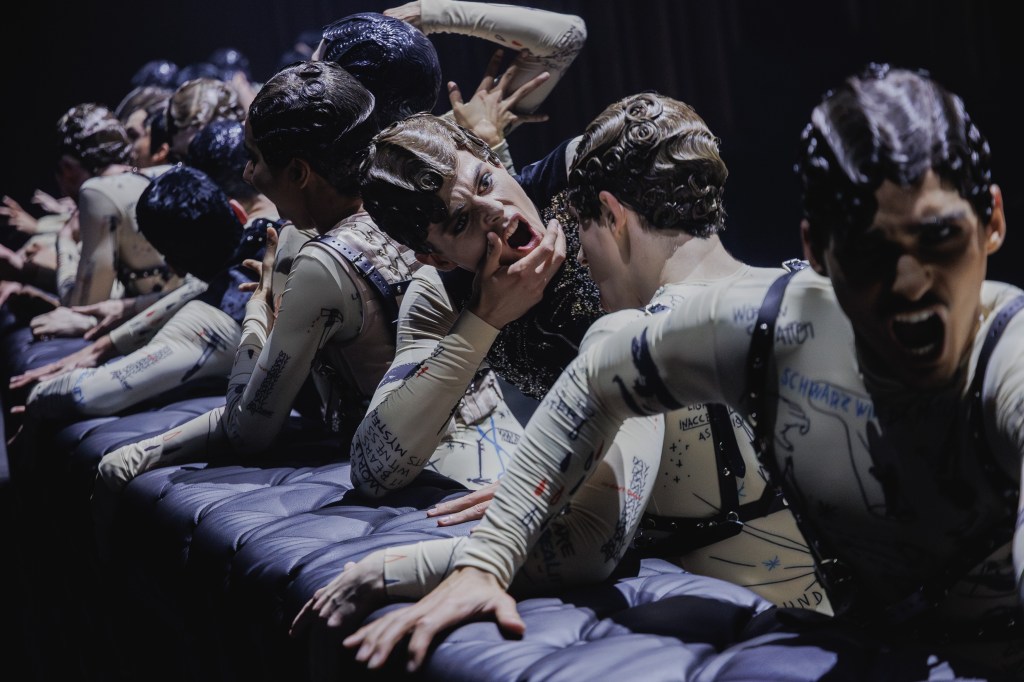
Wunderkammer by Marcos Morau will be performed from October, 16th at the Komische Oper Berlin (Schiller Theater)
 Flannie