Ferrari’s first mid-engined road car
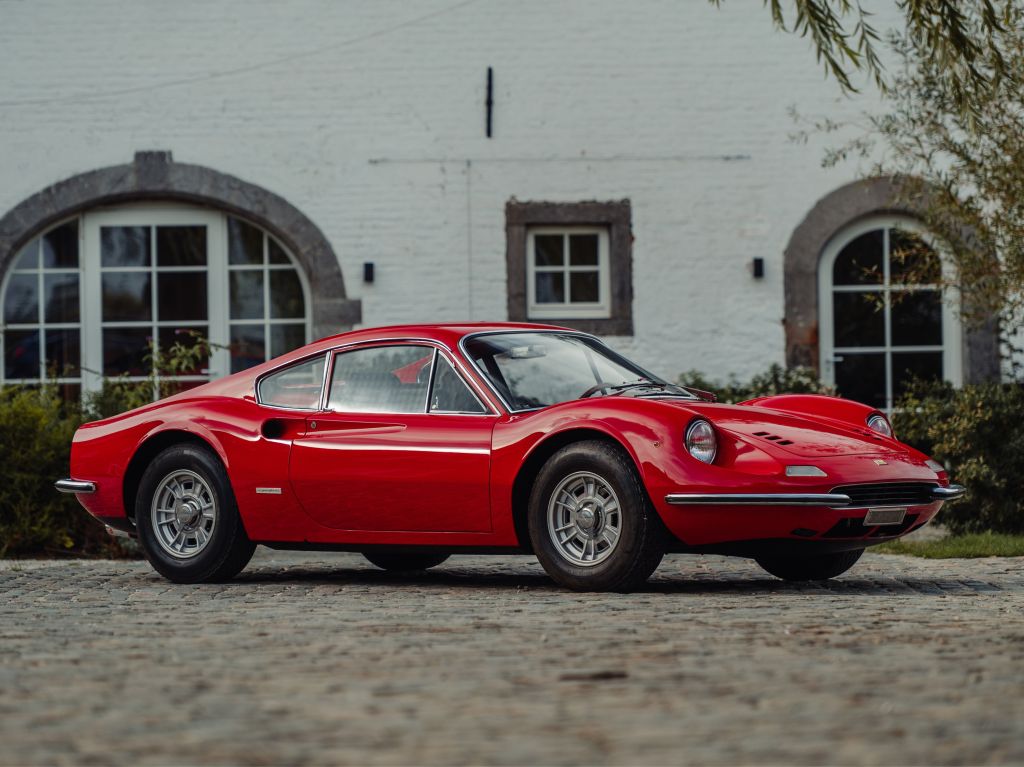
From Bonhams Auctions in Le Zoute, Belgium, on October 11th, a look back at one historical piece, the 28th Dino ever produced.
• The only alloy-bodied Dino production model
• Highly original example
• Fitted with its matching-numbers engine and gearbox
• Thoroughly overhauled mechanically in 2023
• Currently registered in Belgium
It was the need for a production-based engine for the new Formula 2 that had prompted the introduction of a ‘junior’ Ferrari, the Dino 206 GT, at the Turin Motor Show in 1967. The latest in a line of Dino V6 ‘quad-cam’ engines stretching back to the late 1950s, the new unit proved as successful on the racetrack as in the showroom, Derek Bell and Ernesto Brambilla both winning races in the European Championship, while Andrea de Adamich triumphed in the 1968 Argentine Temporada series.
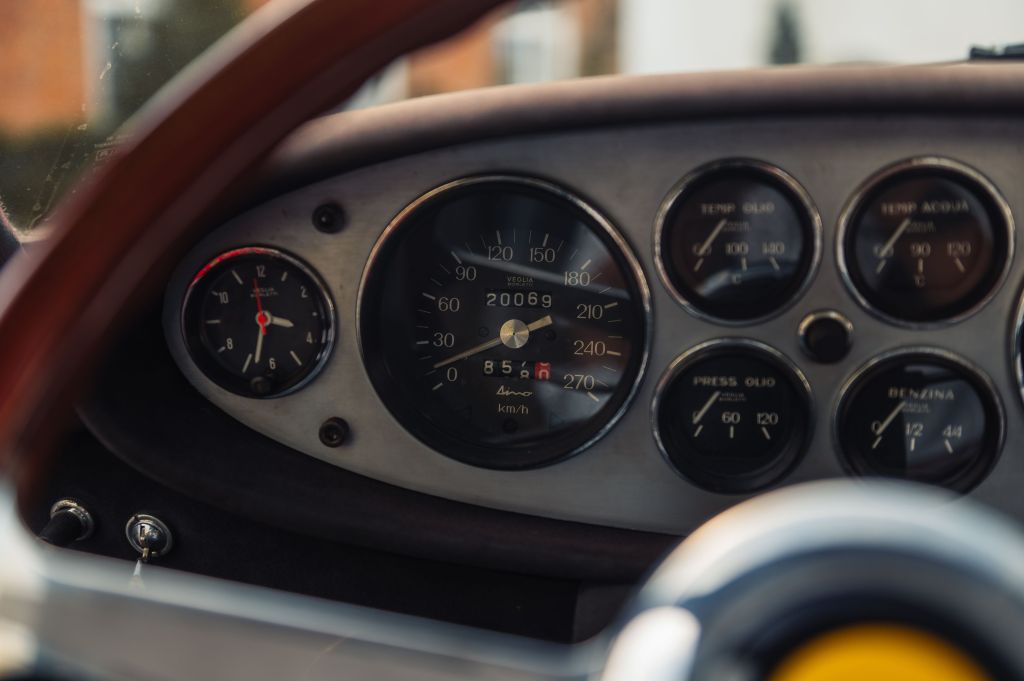
Building on experienced gained with its successful limited edition Dino 206S sports-racer of 1966, Ferrari retained the racer’s mid-engined layout for the road car but installed the power unit transversely rather than longitudinally. A compact, aluminium-bodied coupé of striking appearance, the Pininfarina-styled Dino – named after Enzo Ferrari’s late son Alfredino Ferrari and intended as the first of a separate but related marque – was powered by a 2.0-litre, four-cam V6 driving via an in-unit five-speed transaxle. The motor’s 180 brake horsepower was good enough to propel the lightweight, aerodynamically-efficient Dino to 142mph, and while there were few complaints about the car’s performance, the high cost enforced by its aluminium construction hindered sales.
A 2.4-litre version on a longer wheelbase – the 246 GT – replaced the original Dino 206 in late 1969. Built by Scaglietti, the body was now steel and the cylinder block cast-iron. Produced for little more than a year and in limited numbers, the Dino 206 GT is widely regarded as the connoisseur’s Dino. Total production amounted to only 152 coupés, all to European specification, between chassis numbers ‘00102 to ‘00410’. Key features unique to the 206 GT include the following:
• All-aluminium bodywork
• Shorter wheelbase, enhancing agility and turn-in
• 2.0-litre all-alloy V6, 180 bhp
• Rudge knock-off wheels with straight-eared spinners
• Thin bumpers and lighter exterior trim
• External fuel filler cap
• Six engine-lid louvres per side (seven on the 246)
• Girling brake calipers
• Painted aluminium dashboard panel
• Black-painted cam covers
• Unique gear lever knob with resin-embedded shift pattern
• Firewall-mounted headrests
• Passenger footrest/grab handle
• Centre-console climate controls
• Wood-rim steering wheel
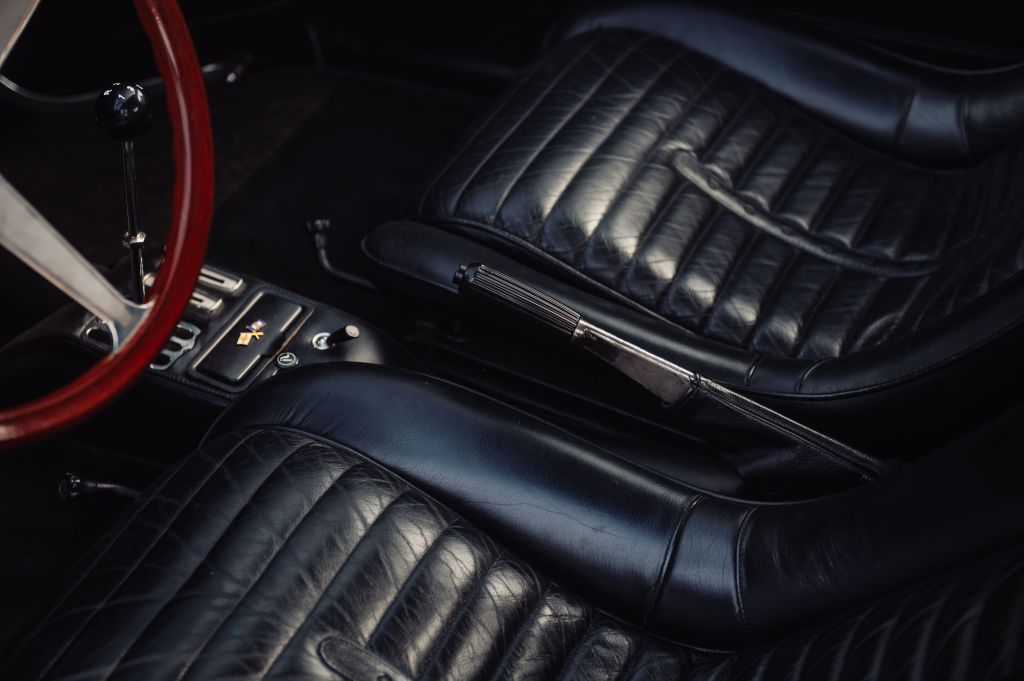
Early interior trim details, including distinctive vinyl grain and cloth seat inserts with Terry-style texture, further differentiate this 206 GT from later production. Notably, early cars carried minimal Ferrari branding, reflecting the Dino’s original positioning as a marque in its own right. The only visible Ferrari marking was often limited to the air-filter cover plate.
Based on factory records, registry correspondence, period documentation and surviving materials, the history of this Dino 206 GT is known and documented. The 28th Dino 206 GT produced, chassis number ‘00150’ was delivered new in Italy in November 1968 to Dino Ravasio & Figli in Verona, finished in its original and highly desirable colour combination of Rosso Chiaro Ferrari (20-R-190) with Nero (161) leather interior and Panno Rosso (red cloth) seat inserts. This specification is confirmed by registry correspondence and aligns with the car as presented today (with the exception of the red cloth seat inserts). This car’s engine and gearbox carry matching serial numbers.
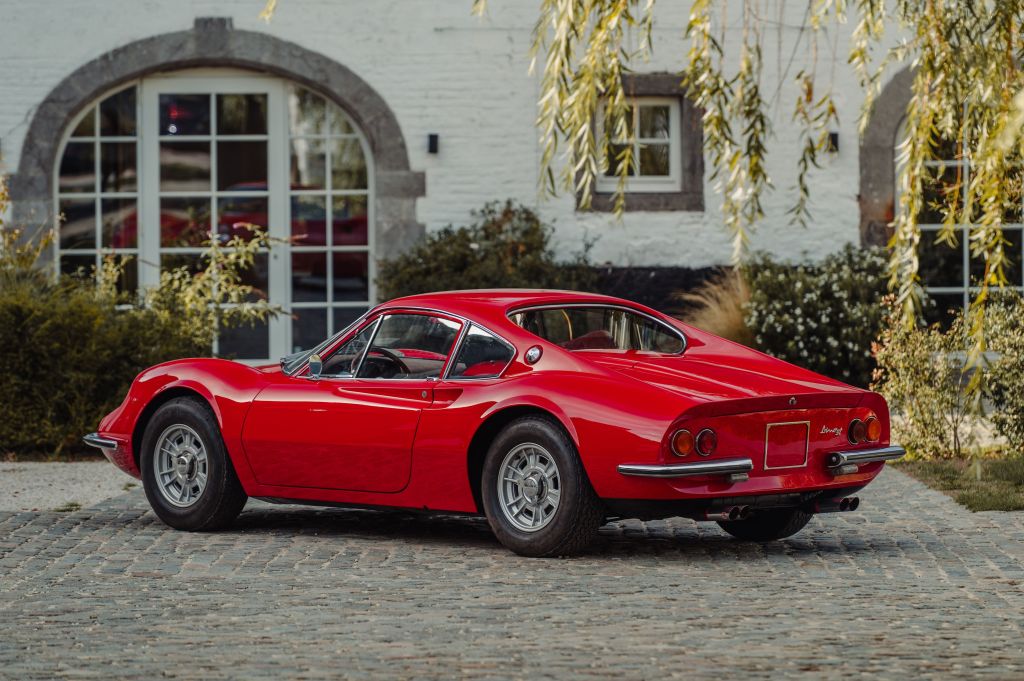
This car was originally registered in Rome in 1968 and retains its Italian black number plates, ‘Roma F20552’, a rare and evocative feature that significantly enhances its historical presence and authenticity.

